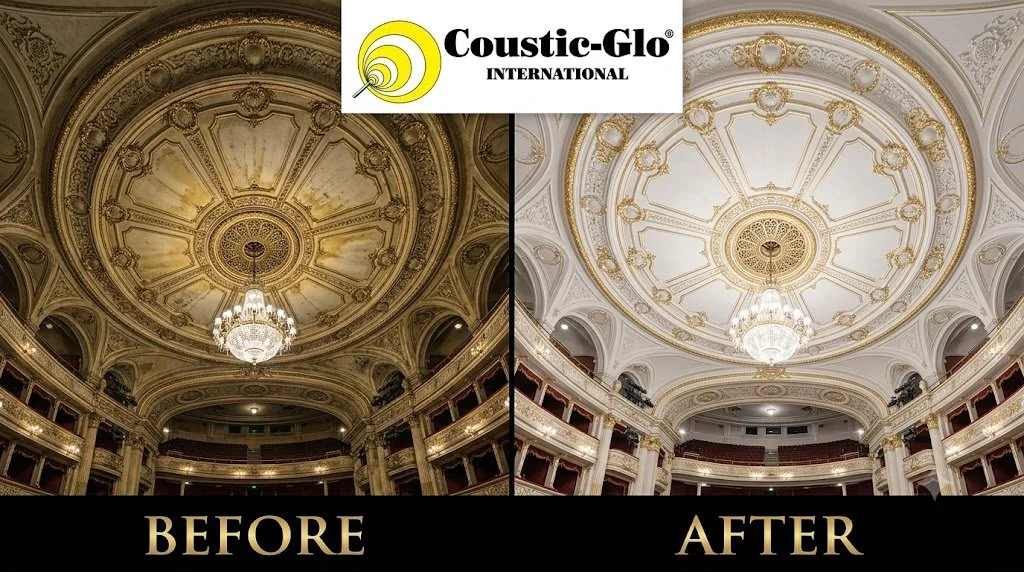
The Forgotten Hazard Above Your Head: Why Cleaning Your Ceiling Matters Way More Than Painting It
Most cleaning routines stop at eye level. Floors get vacuumed, counters get wiped, vents get dusted, and bathrooms get sanitized. The ceiling, meanwhile, stays largely untouched for years.
That is a costly blind spot.
Ceilings collect far more than a little discoloration. In homes, offices, schools, restaurants, medical spaces, and retail buildings, they capture dust, grease, smoke residue, pet dander, and moisture-related contamination. If the ceiling is textured or made of acoustic tiles, it can hold onto those pollutants especially well. What looks like a cosmetic issue is often an indoor air quality issue, a maintenance issue, and sometimes a moisture warning.
Why ceiling cleaning matters for indoor air quality
A ceiling is not just a lid over a room. It is part of the air environment people live and work in every day. When HVAC systems cycle on, when doors open, when people walk through a room, settled particles can move back into the breathing zone. EPA guidance notes that household dust can contain biological contaminants, and ordinary indoor activity can stir that dust into the air.
That matters even more with porous surfaces. Acoustic ceiling tiles and textured ceilings are designed with tiny openings and irregular surfaces. Those features help with sound control, yet they also give dust and residue places to lodge over time. In a commercial setting, years of buildup can quietly affect how a room smells, looks, and feels.
OSHA ties healthy indoor air quality to proper building operations and routine maintenance. That is a practical point for Twin Cities businesses. If the ceiling is stained, dingy, or odorous, the issue is rarely just aesthetics. It can reflect ongoing contamination from inside the building, poor ventilation, cooking residue, smoking history, or past moisture events.
A clean ceiling supports a cleaner room. A neglected ceiling can keep feeding the very problems that property managers and facility teams are trying to solve.
Why painting over a dirty ceiling often makes things worse
Painting feels easy because it hides the surface. It does not solve what is in the surface.
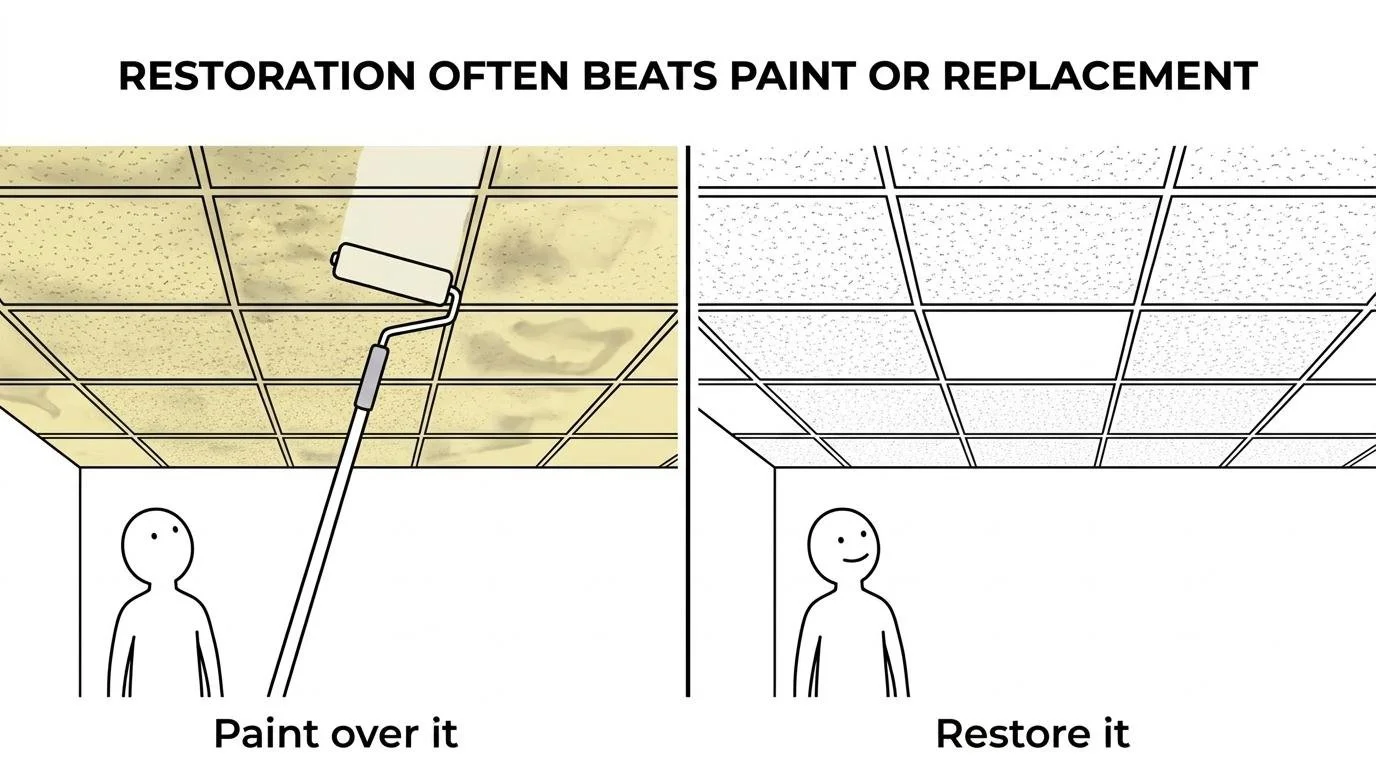
For standard drywall ceilings in good condition, paint may be a reasonable finish choice after proper prep. Acoustic tile ceilings are different. They are engineered materials, not blank canvases. When standard paint is rolled or sprayed over them, it can fill the fissures that help absorb sound. The result is a harder, more reflective surface and a noisier room.
That tradeoff is easy to miss until the echoes start. Conference rooms feel sharper. Restaurants sound louder. Offices lose some of the sound control that made the space workable in the first place.
There is also a safety concern. Many ceiling tiles are manufactured with fire-related performance in mind. Heavy coatings can interfere with those properties. In regulated commercial spaces, that is not a minor detail.
Then there is the stain problem. Water marks, nicotine, cooking grease, and smoke residue often bleed through ordinary paint. What looked bright on day one can show yellowing or shadowing again far sooner than expected. At that point, the building owner has paid for a cosmetic cover-up and still has the original contamination sitting overhead.
Here is how the three common options compare:
Ceiling Maintenance Options: Pros, Cons, and Best Uses
Painting
What it does: Temporarily covers discoloration.
Main downside: Can reduce acoustical performance, may affect fire-related properties, and stains can return.
Best fit: Limited use on non-acoustic surfaces, and only after proper remediation.
Replacement
What it does: Removes old material entirely.
Main downside: Highest cost, causes disruption, creates debris, and results in downtime.
Best fit: Ideal for severe damage, moldy tiles, or failed ceiling material.
Cleaning and Restoration
What it does: Removes soil and residue while preserving the ceiling system.
Main downside: Requires trained specialists and an inspection first.
Best fit: Most effective for stained, dirty, smoke-affected, or aged acoustic ceilings.
Common signs your ceiling needs cleaning or closer inspection
A ceiling usually gives warnings long before major action is needed. Some clues are obvious. Others show up as air quality complaints, odors, or a room that always looks dull even after the rest of the space has been cleaned.
In the Twin Cities, those signs often build slowly through winter heating cycles, closed-window months, and heavy commercial occupancy. Restaurants may see grease film. Office buildings may notice gray dust patterns around diffusers. Older properties may carry smoke staining from previous tenants. Schools, churches, clinics, and hospitality spaces often have aging acoustic tile that has simply never been professionally cleaned.
Watch for signs like these:
Yellowing or browning
Water rings
Dust shadows near vents
Lingering odors
Visible smoke or nicotine residue
A room that feels darker than it should
Increased complaints about allergies or irritation
Why ceiling restoration is a smart choice for Twin Cities businesses
For many businesses in Minneapolis, St. Paul, and the surrounding metro, ceiling restoration makes financial sense before anything else. Full replacement often means material costs, labor, disposal fees, schedule disruptions, and sometimes after-hours work to reduce impact on staff or customers. Professional ceiling restoration can often cut that cost dramatically, with savings that may reach 70% to 80% compared with replacement or major repainting projects; this is why cleaning your ceiling matters.
The operational case is just as strong. Replacing an acoustic ceiling creates mess. Tiles come down, debris goes out, and normal use of the room may be interrupted. Cleaning and restoration are usually far less disruptive. That matters in active workplaces, retail environments, restaurants, hotels, and medical offices where downtime carries its own price.
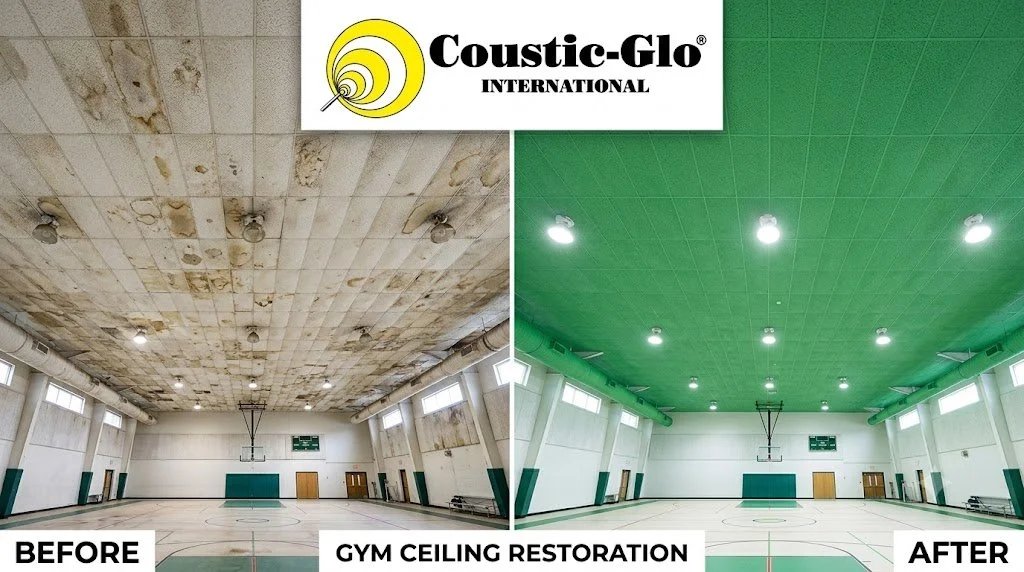
There is also a sustainability benefit that building owners increasingly care about. When a ceiling can be restored rather than torn out, tons of material stay out of the landfill. That supports waste reduction goals without asking the business to accept a weaker result.
For local search intent, this is where terms like acoustic ceiling cleaning in Minneapolis, ceiling tile restoration in St. Paul, and commercial ceiling cleaning in the Twin Cities matter because they reflect a real service gap. Many businesses assume their choices are paint, restore instead of replace, or replacement. Restoration is often the better third option.
When ceiling tile replacement is still necessary
Cleaning, surface care, and restoration are powerful tools, though they are not magic. Some ceilings should be replaced, especially when the material has been structurally compromised.
EPA guidance is direct on moisture. Water-damaged areas should be dried quickly to help prevent mold growth, and moldy ceiling tiles may need replacement. That is a key distinction. A stained tile is not always a moldy tile. A dirty ceiling is not always a failed ceiling. Yet if moisture has broken down the tile, caused sagging, or supported mold growth, replacement may be the responsible step.
A proper inspection should sort out whether the issue is surface contamination, an old leak, active moisture, or material failure. Painting first skips that step, which is one reason it often leads to repeat problems.
Replacement is usually the better option when:
Tiles are moldy: Surface cleaning is not enough if biological growth has penetrated the material.
Tiles are sagging or crumbling: Structural breakdown means the tile has lost integrity.
There is active water intrusion: The leak or humidity source needs correction before any finish work.
Code or facility standards require new material: Some settings call for replacement after certain damage events.
What professional ceiling cleaning and restoration should include
A true restoration service is more than spraying a ceiling until it looks whiter. The process should begin with evaluation. The contractor needs to identify the ceiling type, the source of staining, signs of moisture, and the expected outcome. Acoustic tile, drywall, plaster, and textured finishes do not all respond the same way.
Specialized systems, including Coustic-Glo ceiling restoration methods, are built around cleaning and sanitizing rather than simply hiding stains. The goal is to dissolve and remove grease, smoke residue, dust, nicotine buildup, and other contaminants while preserving the acoustical character and original appearance of the tile as much as possible. When done properly, that means the room looks brighter without sacrificing the ceiling’s intended function.
Light reflectance is not a small benefit, either. Cleaner ceilings bounce more light back into a room. That can make offices, corridors, classrooms, and hospitality spaces feel fresher and more open. In some buildings, it can even support lower lighting demand.
If you are comparing providers, ask clear questions before work starts:
Process: Does the company clean and restore the ceiling or simply coat it?
Acoustics: Will the method preserve the tile’s sound-absorption qualities?
Fire-related performance: Is the process designed to avoid altering factory-applied properties?
Moisture review: Will they flag signs of leaks, mold, or damaged tile that call for replacement?
Occupancy planning: Can the work be scheduled to reduce disruption to staff, tenants, or customers?
Ceiling cleaning and restoration for offices, restaurants, and multi-site facilities
Different buildings foul ceilings in different ways. Office ceilings often collect dust, HVAC residue, and discoloration from years of occupancy. Restaurants deal with airborne grease and stronger odors. Hotels and retail spaces face appearance pressure because customers look at the whole environment, even when they do not realize it. In healthcare-adjacent settings, cleanliness signals matter even more.
Multi-site operators have another issue: consistency. A bright, uniform ceiling helps every location feel maintained and professional. If one site has yellow tile, water shadows, or smoke stains, the brand impression suffers. Restoration helps correct that without rolling replacement projects through every building.
That is why ceiling maintenance belongs in the same conversation as carpet care, floor care, and air quality planning. It is not an extra. It is part of responsible facility upkeep.
For businesses across the Twin Cities, looking up can reveal one of the most overlooked maintenance opportunities in the building. A ceiling that is clean, sanitary, acoustically effective, and visually bright supports employee comfort, customer confidence, and healthier indoor spaces. Before reaching for paint or pricing out a full tear-out, it makes sense to have the ceiling evaluated for professional cleaning and restoration.